News

  • 02
    2013
    Successful World Wetland Day Celebration in Laafeld, Austria
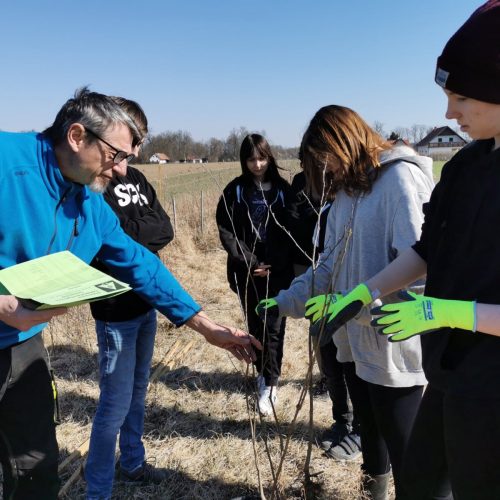
    February 2nd, 2013, World Wetlands Day: Rain, cold temperatures and even snow - one would say a true wetland day. Despite the unfavourable hiking conditions about 400 “friends of the Mura River” joined the 14 km walk along Mura River downstream of Bad Radkersburg in Austria on the border to Slovenia. Since 2000 the "Committee for the protection of the Mura River” organizes these traditional walks on World Wetland Day in one of the Mura countries Austria, Croatia, Hungary or Slovenia. Each year a new stretch of the wonderful Mura floodplains is explored to show the values of the still existing floodplain forests at Mura and threats to the River and its floodplains.
    Word Wetland Day 2013, Laafeld
    The Natura 200 site in Austria covers 34 km along the Mura River, which shares its border with Slovenia. It marks the origin of the free-flowing lower stretches of the Mura and hosts the second largest floodplain forests in Austria. Nevertheless, the river´s course has been regulated in the past and many side branches have been cut off from the river. EU-funded restoration projects are now trying to restore natural conditions.

    More information about Ramsar Convention 
    More information on the Ramsar hike along Mura river  
     
  • 01
    2013
    “Wetlands take care of Water“
    An International Committee Action for the Protection of Mura River NAŠA MURA-UNSERE MUR
    2013 is the UN International Year of Water Cooperation. Along the Mura River there are still wetlands which are not on the map of Ramsar protected sites of International Importance. For this purpose Tabrih NGO is organizing walks at Mura River since 2000. This year we will visit Mura near the area of the confluence with Kučnica River and at the Mura River extension in Sicheldorf at European Green Belt. Join us for a walk  along the Mura River with Nature interpreters and get to know the special benefits of the largest wetlands along the Mura River in middle Europe. With our walk we are sending a clear message that Mura River should remain free of dams for power stations as a part of a future  UNESCO Transboundary Biosphere Reserve Mura- Drava-Danube.

    9:00 Meeting place Laafeld, HOAMATHAUS
    Start and Finish, Refreshment and Parking Area
    Welcome by an International Committee for Protection of Mura River and by guests from Slovenia, Austria, Croatia and Hungary

    10:00 Start of the guided walk along the Mura
    Price 6 EUR

    The walk is approximately 14 km long. Warm lunch and drinks will be available. We recommend weatherproof walking boots and clothes. Please form driving communities.

    Contact person in Slovenia for NGO TABRIH: Franc Žižek: +386 31 703 642, tabrih@siol.net 

    Contact person in Austria: Mag. Bernard Wieser, L.E.i.V., 8345 Stainz/Straden 85, 0664 191 93 46, bernard.wieser@utanet.at   www.blauracke.at 

    More information
     
     
  • 11
    2012
    The unique Drava-Mura confluence remains unspoilt
    The still natural confluence of Mura and Drava rivers, straddling along the Croatian and Hungarian border, will not be channelled according to the latest decision by the Croatian Environmental Ministry. This is an important signal to effectively protect the core zone of the recently designated Croatian-Hungarian part of the future 5-country UNESCO Biosphere reserve “Mura-Drava-Danube”.

    The “Mura-Drava” confluence is a hotspot for rare species such as black stork, little tern, otter or the last occurrence of the German Tamarisk in Croatia. All species rely on still existing natural shifting of the riverbeds and their habitats like floodplain forests, sand and gravel banks or unspoilt shores.

    Preceding the wise decision of the environmental ministry, WWF, EuroNatur and the Drava League led a four year long battle against this environmental disastrous project. The plans of the Croatian and Hungarian water engineering authorities envisaged to transform the living rivers into a lifeless canal. The NGOs also raised the concern of the European Commission which commissioned an independent expert who criticised the project severely.


    See video by Goran Safarek
     

    Simulation Mura Drava confluence, Ornithological Reserve Veliki Pazut

     
  • 10
    2012
    EU report criticizes Croatia’s environmental performance
    Vienna, Austria, October 22nd, 2012 – A comprehensive monitoring report issued by the European Commission on Croatia’s state of preparedness for EU membership has detected significant gaps in the implementation of EU environmental law. In particular, the report criticizes the insufficient quality of Environmental Impact Assessment studies (EIAs) and finds that they are not in line with EU standards.
    Read more 
     
  • 08
    2012
    A pioneer of Mura-Drava-Danube Biosphere Reserve passed away
    Dr. Martin Schneider-Jacoby On 15th August 2012 Dr. Martin Schneider-Jacoby died after a brief, severe illness at the age of 56. As a staff member of EuroNatur for 25 years - for virtually half of his lifetime - he was committed to the preservation of Europe´s natural heritage, and he never faltered in this commitment. Martin Schneider-Jacoby was especially dedicated to nature conservation on the Balkans. He was a pioneer in the preservation of its most outstanding biodiversity hotspots, like the Sava wetlands of Lonjsko polje.  At the beginning of the nineties, he initiated the large scale trans-boundary protection of the Danube, Drava and Mura rivers – by starting to build up a cooperation between the five Mura-Drava-Danube countries aiming at one major goal: the establishment of a joint UNESCO Biosphere Reserve. The first concept for a 5-country reserve was developed in 1998 and it formed the basis for the recent achievements. He can truly be called the “prime father” of the reserve.

    The death of Martin Schneider-Jacoby is a severe loss, both as an excellent nature conservationist and as a very much appreciated friend and colleague. We cannot replace Martin Schneider-Jacoby but we can do our utmost to carry on his conservation work and his spirit.

    Our heartfelt thanks go to him for his many years of exceptional commitment and involvement. And we wish to express our sincere sympathies to his immediate circle, his family and to all those who were close to him.

    WWF and the "Mura-Drava-Danube" team

    Read more 


  • 07
    2012
    International meeting on Transboundary UNESCO Biosphere Reserve "Mura-Drava-Danube" in Bukarest during RAMSAR COP 11
    On Thursday 12th July, under the auspice of the RAMSAR COP11, representatives of the governments of Austria, Croatia, Hungary, Serbia and Slovenia, ICPDR, IUCN, Ramsar Secretariat, Wetlands International, WWF, other NGOs and participants at the conference gathered to celebrate the new achievements on the way to designate the pentalateral UNESCO Biosphere Reserve “Mura-Drava-Danube”.
    WWF’s introduction of the initiative to conserve the unique natural values of the three rivers and their floodplains was followed by statements of the five countries (Austria, Croatia, Hungary, Serbia and Slovenia) strengthening their commitment to achieve the final designation of the area as a Biosphere Reserve. The efforts made up to date by all involved parties were rewarded by the announcement of the first nomination of a significant part of the area (80% - about 630.000 ha) shared by Croatia and Hungary as a Biosphere Reserve. The importance of the initiative for nature conservation but at the same time as framework for increased cooperation between the countries to commonly address upcoming threats from unsustainable development (especially navigation) was emphasised by ICPDR, IUCN, Ramsar and Wetlands International representatives. From a global perspective, the “Mura–Drava– Danube” Transboundary Biosphere Reserve also served to the participants from across the world as a leading example of international cooperation to save one of the last remaining natural wetlands area in Europe.
    RAMSAR COP 11 side meeting on Transboundary UNESCO Biosphere Reserve "Mura-Drava-Danube"
     
  • 07
    2012
    Croatian-Hungarian Biosphere Reserve "Mura-Drava-Danube" approved by UNESCO on 11 July 2012
    Good news on Mura, Drava and Danube: the Croatian-Hungarian part of the planned 5-Country Biosphere Reserve “Mura-Drava-Danube” was officially approved on 11 July 2012 by UNESCO MAB Committee in Paris. It covers  630,000 ha (about 80% of the future 5-Country Biosphere reserve “Mura-Drava-Danube”): 240,000 ha core and buffer zones (existing protecting area network) plus additional 390,000 ha transition zones. This new cross border biosphere reserve is the basis for effective protection and better management of the rivers and their catchment area, ecological river basin management and revitalisation. But also enables sustainable development of the region and its cultural values. Especially in our fight against the planned Danube regulation in Croatia and other lurking dangers like plans for hydropower dams or sediment extraction international protection is of enormous importance.

    Already 2009 the environmental ministers of Croatia and Hungary signed a joint declaration to establish a Trans-Boundary Biosphere Reserve along the Mura, Drava and Danube Rivers. Given the global significance of this agreement, WWF has highlighted the leading role of the Governments of Croatia and Hungary with a “Leaders for a Living Planet” award. WWF wholeheartedly congratulates the Croatian and Hungarian ministries on keeping the promise, and leading the way for Austria, Slovenia and Serbia. Serbia plans to submit in September 2012 at UNESCO MAB, and also Austria and Slovenia are undertaking first steps for nomination.

    The governmental agreement between Croatia and Hungary is based on over a decade of work by park authorities, nature conservation institutions and governments with string promotion of the non-governmental sector including WWF, EuroNatur, Drava League, Green Action, Green Osijek, Croatian Society for Bird and Nature Protection, ZEUS, ZEO Nobilis, DOPPS-Birdlife Slovenia and Drava Federation.

    Read press release of UNESCO MAB  
    See photos at UNESCO MAB website 

    Read Press release of WWF Austria 
    Read Press release of WWF Hungary 


  • 07
    2012
    Grey Globe goes to Croatia (Kopacki Rit/ Danube)
    Wetland Globes shine spotlight on world’s most vulnerable habitats
    The good, the bad and the ugly of the world’s wetlands were revealed at an official ceremony in Bucharest on 7 July 2012 at 18.15 local time (16.15 UK time).

    Chris Roston (WWN) handing over the Grey Globe to Croatia

    The Wetland Globe Awards highlight the benefits of good wetland management and, conversely, the costs to both humans and wildlife of unsustainable development.

    The World Wetland Network (WWN) developed the Wetland Globes to give a voice to small non-governmental organisations (NGOs) working on conservation.  They are non-financial awards, given to the wetland itself. This year there were some 2,000 votes from grass-roots NGOs in 270 wetlands around the world.

    BLUE Wetland Globes
    recognise best practice in wetland management; GREY Globes highlight wetlands that are being actively degraded, neglected or are under threat.

    The Wetland Globes aim to show that without national protection, short term economic gain and pollution seriously degrade many wetland sites.

    In celebrating good restoration and management the Wetland Globes also demonstrate that with the right incentives, it is possible to slow the loss of biodiversity and habitat, by encouraging private sector interests to work with nature rather than against it.  

    One of the five Grey Globes goes to Croatia:
    the Croatian Danube Regulation Project threatens 50,000 ha of protected areas of outstanding natural value in Europe. It will severly impact the vast "Kopacki Rit" wetlands, Danube’s most valuable and best preserved floodplain system along its entire 2,850 kilometers length.

    PDF-Document Grey Globe Award Kopacki Rit 


    Read More 

     
  • 06
    2012
    Alliance of NGOs claims freedom instead of strangulation for the Danube in Croatia
    Osijek/Croatia, June 19th, 2012 – More than 50 kilometres of the entire Danube’s best preserved floodplain areas shall soon fall victim to devastating and illegitimate regulation measures, an alliance of international and Croatian NGOs warned in Osijek today. Affected is the region between the Croatian village of Batina and the confluence of the Danube and the Drava at Aljmaš, including the world famous Nature Park “Kopački rit” in Croatia, bordering Serbia. A group of journalists, representing major European media is currently visiting this area to get a first-hand impression of the natural values at stake.

    Read more 
     
  • 06
    2012
    2nd International Working Group and Coordination Board Meeting
    The 2nd International Working Group Meeting was prepared by WWF in consultation and cooperation with the Croatian Ministry of Environment and Nature Protection (MoENP). It was attended by 50 participants from all five Mura-Drava-Danube countries. Venue was the Eco-center “Zlatna greda" of the NGO Green Osijek at the Nature Park Kopački rit.
    Read more 
    2nd International Working Group and Coordination Board Meeting_Zlatna Greda_12.6.2012