News
Ten hectares of privately owned land along the Croatian Mura have now been secured for nature conservation—half of the LIFE RESTORE for MDD project’s overall target. This includes around 1.5 hectares of degraded grassland in the Donje Međimurje Natura 2000 site, where restoration work has already begun.
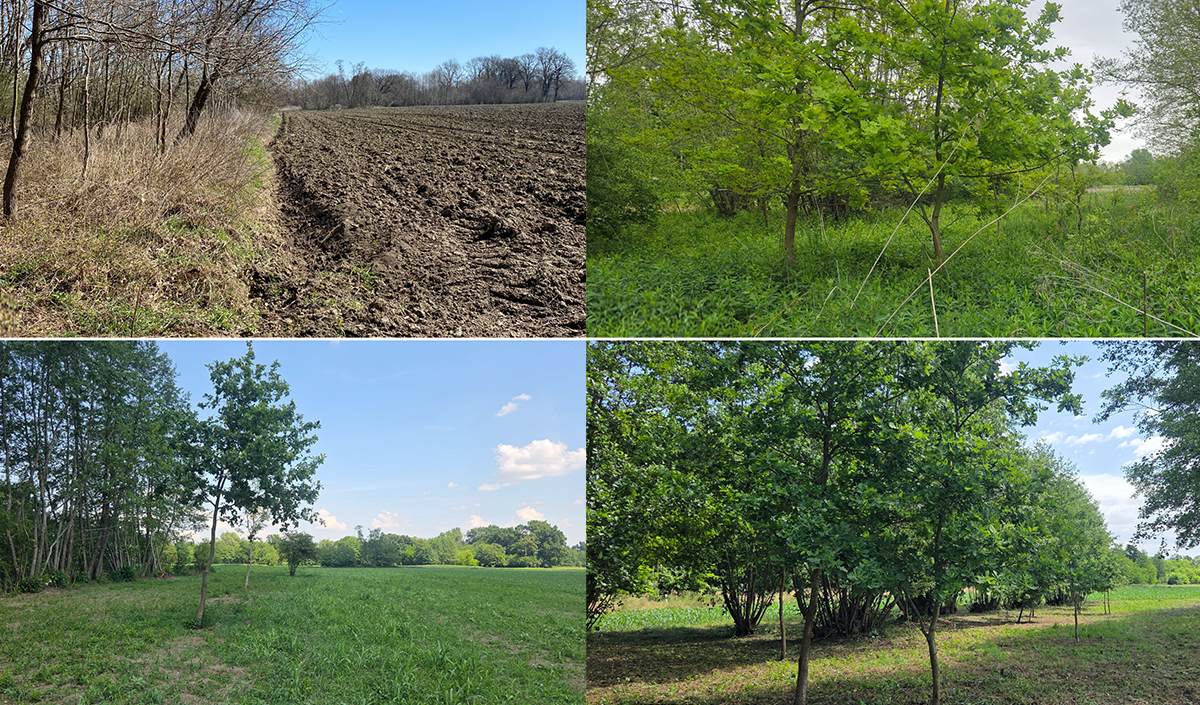
The area is characterised by a mosaic of meadows and arable fields bordered by natural hedgerows, a traditional landscape structure also known as bocage. However, this valuable mosaic is increasingly disappearing as a result of agricultural intensification and the abandonment of less productive land.
Through LIFE RESTORE for MDD, Međimurje Nature aims to purchase and restore four hectares of neglected, ploughed and otherwise degraded grassland. The work will help improve the condition of lowland hay meadows, a protected habitat type, while creating suitable habitats for the critically endangered scarce large blue and dusky large blue butterflies (Phengaris teleius and Phengaris nausithous).
Turning Former Arable Land Back into Meadow
At the beginning of the year, one of the plots was still covered with maize stalks. The land was ploughed, the soil prepared and a grass-clover mixture sown. Following a dry period and subsequent rainfall, the first shoots emerged and gradually turned the plot green.
Although invasive and weedy plants currently dominate the site, this is a normal stage in the restoration process. Regular mowing and the additional sowing of native meadow species will support its gradual development into a species-rich meadow over the coming years.
Bringing an Abandoned Meadow Back to Life
Another plot had not been managed for around 10 to 15 years and had become overgrown with woody vegetation, blackberry bushes and nettles. Restoration began with mulching and the removal of scrub and excessive tree growth, followed by clearing the cut vegetation from the site.
During this work, great burnet (Sanguisorba officinalis) was discovered beneath the overgrowth. As an essential host plant for large blue butterflies, its presence is an encouraging sign of the meadow’s restoration potential.
The first interventions have already significantly improved the condition of the sites. Continued mowing, the sowing of native meadow plants and careful long-term management will now help characteristic vegetation recover and create better conditions for butterflies and other grassland species.
The restoration story continues as the plots gradually develop into diverse and valuable meadow habitats.