News
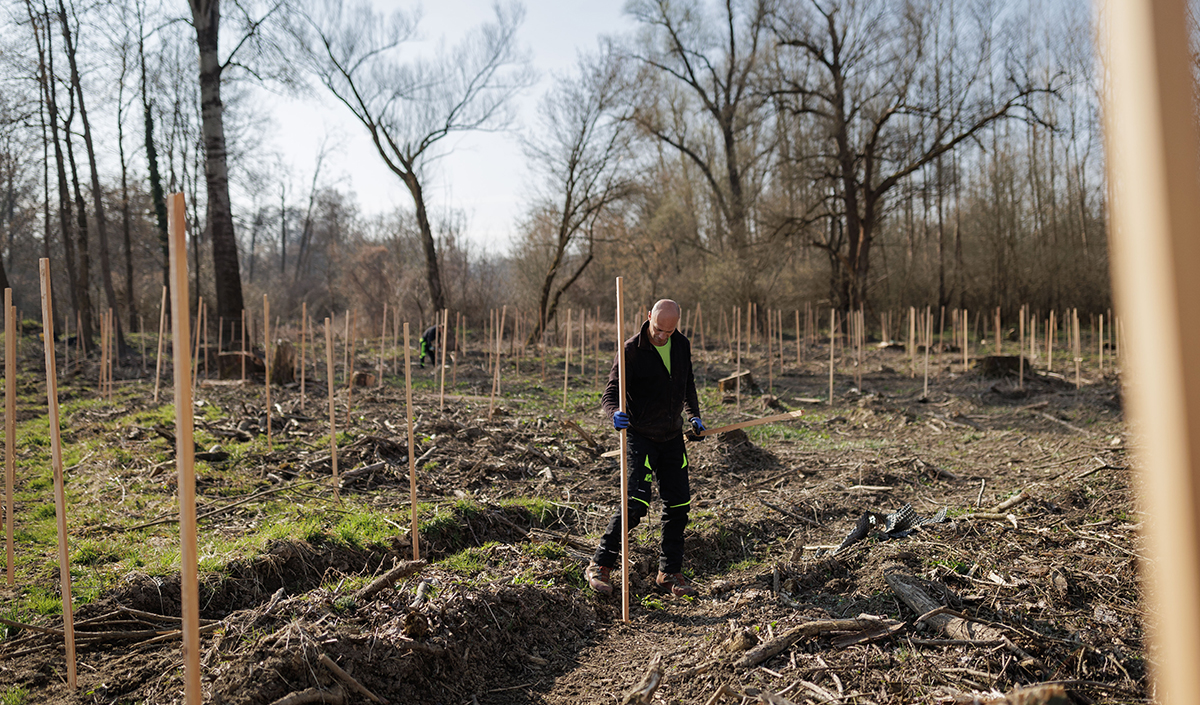
This spring, 4,500 oak seedlings were planted in Murska šuma as part of ongoing efforts to restore native floodplain forests along the Slovenian Mura. Supplementary planting was also carried out at other sites where young trees had been affected by frost and prolonged dry conditions.
The planting forms part of a wider effort to convert 19 hectares of non-native poplar plantations into more natural and diverse floodplain forests. So far, oak, hornbeam, white willow and native poplars have been planted across 4.47 hectares, helping to restore characteristic forest habitats and strengthen ecological connectivity along the river corridor.
Regular maintenance is essential while the young trees become established. Competing vegetation is cut back, protective fencing is maintained to reduce damage from wildlife, and the seedlings are monitored so that trees lost to frost, drought or other natural conditions can be replaced.
The work contributes to the LIFE RESTORE for MDD project’s wider goal of improving 336 hectares of floodplain forest habitats along the Mura, Drava and Danube. It focuses on two protected habitat types – priority alluvial forests and riparian mixed forests – which depend on natural river and floodplain dynamics and provide habitats for a wide range of plant and animal species.
Over time, the restoration will help transform uniform plantations into more diverse and resilient floodplain forests that can better support biodiversity and adapt to changing environmental conditions.