News
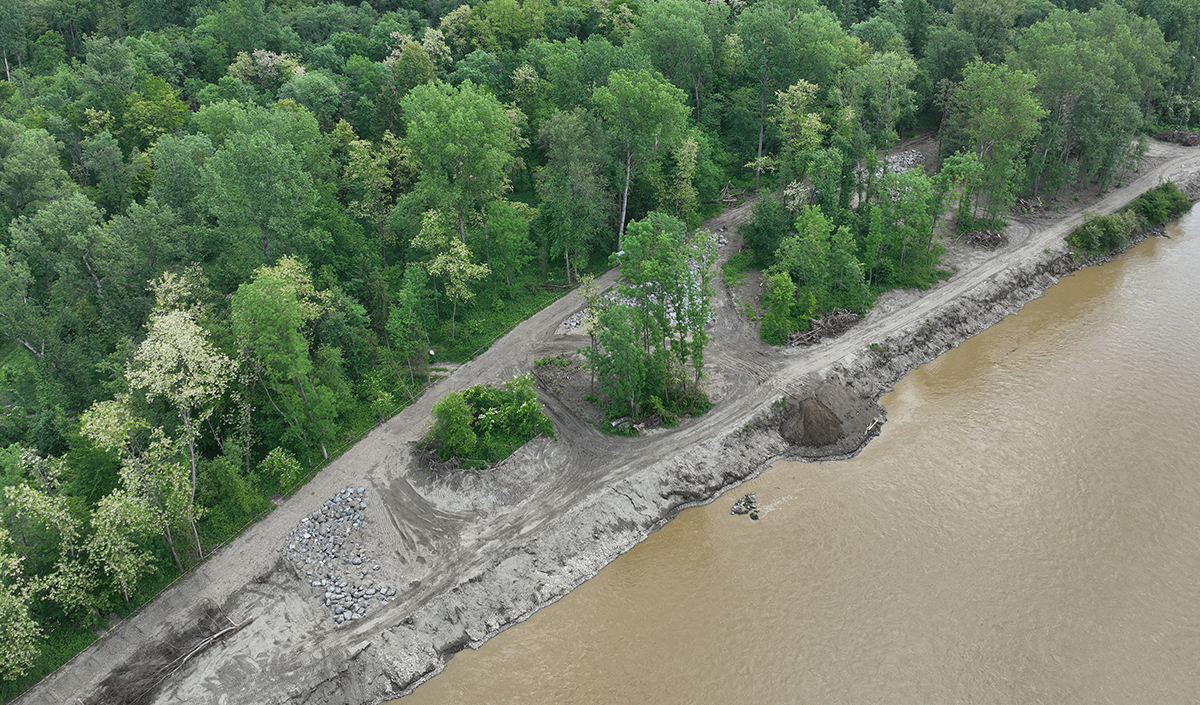
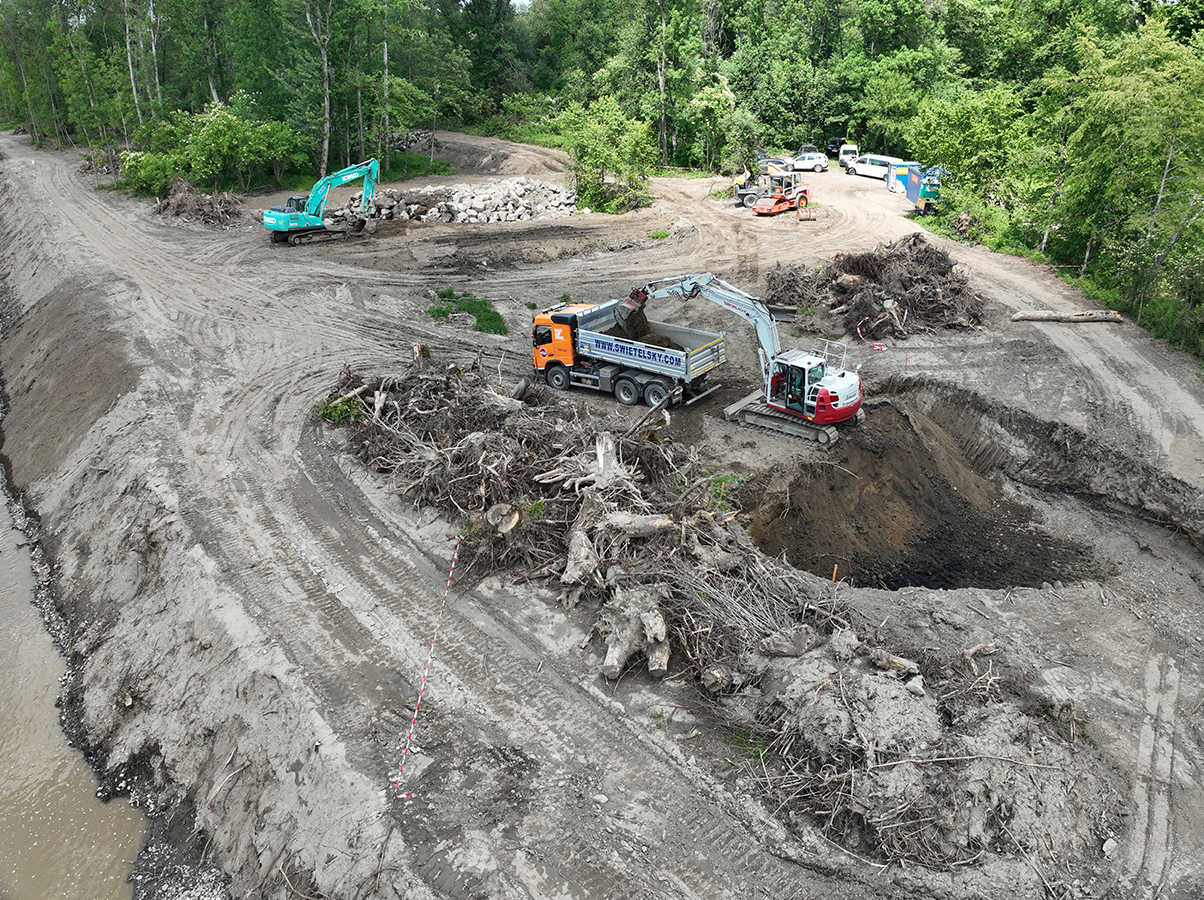
Construction work to widen the Mura at the Sulzbach confluence in Austria began in April 2026 and is expected to be completed by the end of the year.
Along approximately 450 metres of the river, existing bank protection is being removed to give the Mura more space to develop naturally. This will allow the river to widen and form more diverse structures, creating valuable new habitats for plants and animals and significantly improving the ecological quality of the river landscape.
Together with river-widening measures on the Slovenian side of the Mura, the work at Sulzbach forms part of a wider, coordinated effort to restore the transboundary river. As natural river processes do not stop at national borders, complementary measures on both banks help give the Mura more space and improve the ecological condition of the river corridor as a whole.
To guide this development, two flow-directing groynes are being constructed in the Mura. In the central section, part of the existing bank protection will remain in place, encouraging an island to form within the widened river section. This will create more varied flow conditions and break up the previously uniform current.
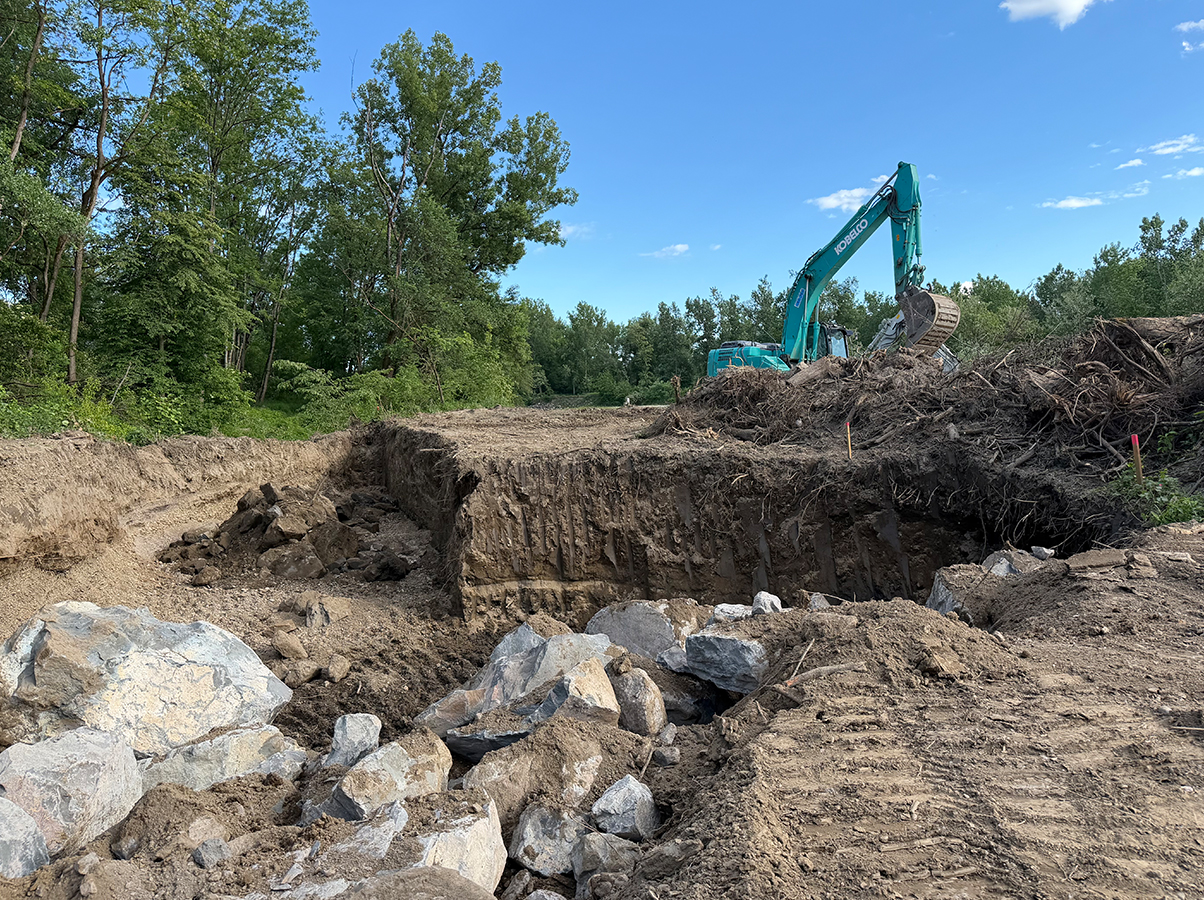
Further upstream and downstream, additional groynes are being constructed 30 to 50 metres behind the current riverbank. Initially covered with soil, they will gradually be exposed during floods as the Mura reshapes its banks. These concealed structures will protect adjacent land, infrastructure and the planned maintenance path while supporting the development of diverse habitats along the newly forming riverbank.
Ecological conditions at the Sulzbach confluence are also being improved. Existing barriers are being redesigned to restore passage for fish and other aquatic organisms, while rootstocks and armourstones are being used to create more natural and varied bank structures.
The main hydraulic and ecological measures include:
- removing bank protection along approximately 450 metres of the Mura;
- relocating bank protection 30 to 50 metres into the surrounding area in the form of concealed groynes;
- constructing a flow divider and an initial groyne;
- improving habitats in the Sulzbach using rootstocks and armourstones; and
- introducing additional ecological features, including accumulations of woody debris.
→ Find more details in the Sulzbach factsheet.
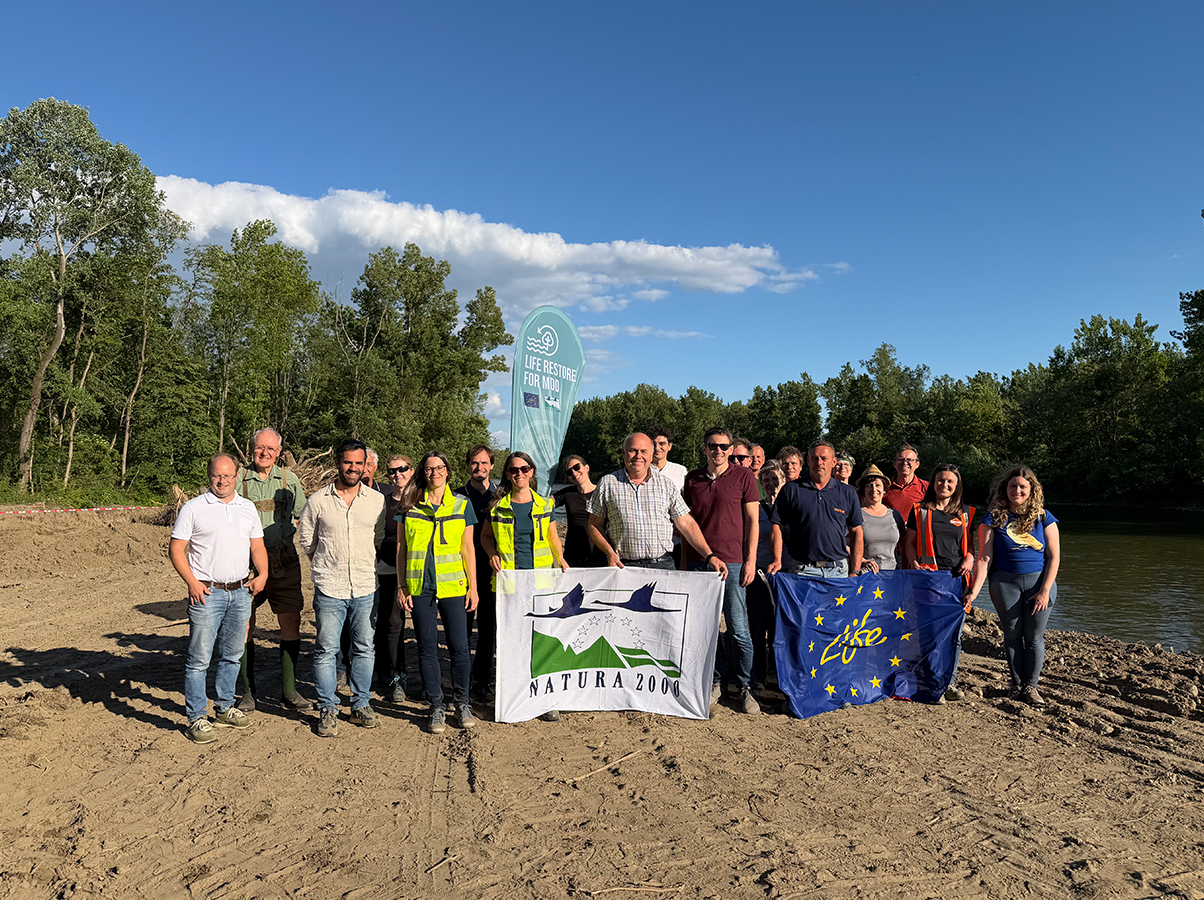
In May, members of the local community were invited to visit the construction site, see the work underway and learn more about its planning and implementation. The excursion also placed the measures in the wider context of river restoration, explaining how they will help restore natural river processes, improve habitats and enhance biodiversity along the Mura.